


In the midst of modern manufacturing, robot arms are changing the rules of production, mixing precision, safety and efficiency in ways that were previously impossible to imagine. These mechanical marvels – often known as robot arms have become essential to industries all over the world motivated by the need to cut operating costs without sacrificing quality. Robotic arms are being integrated into production lines to reduce cost and increase security. Let’s see how these cutting-edge machines are transforming the landscape of industrial production.
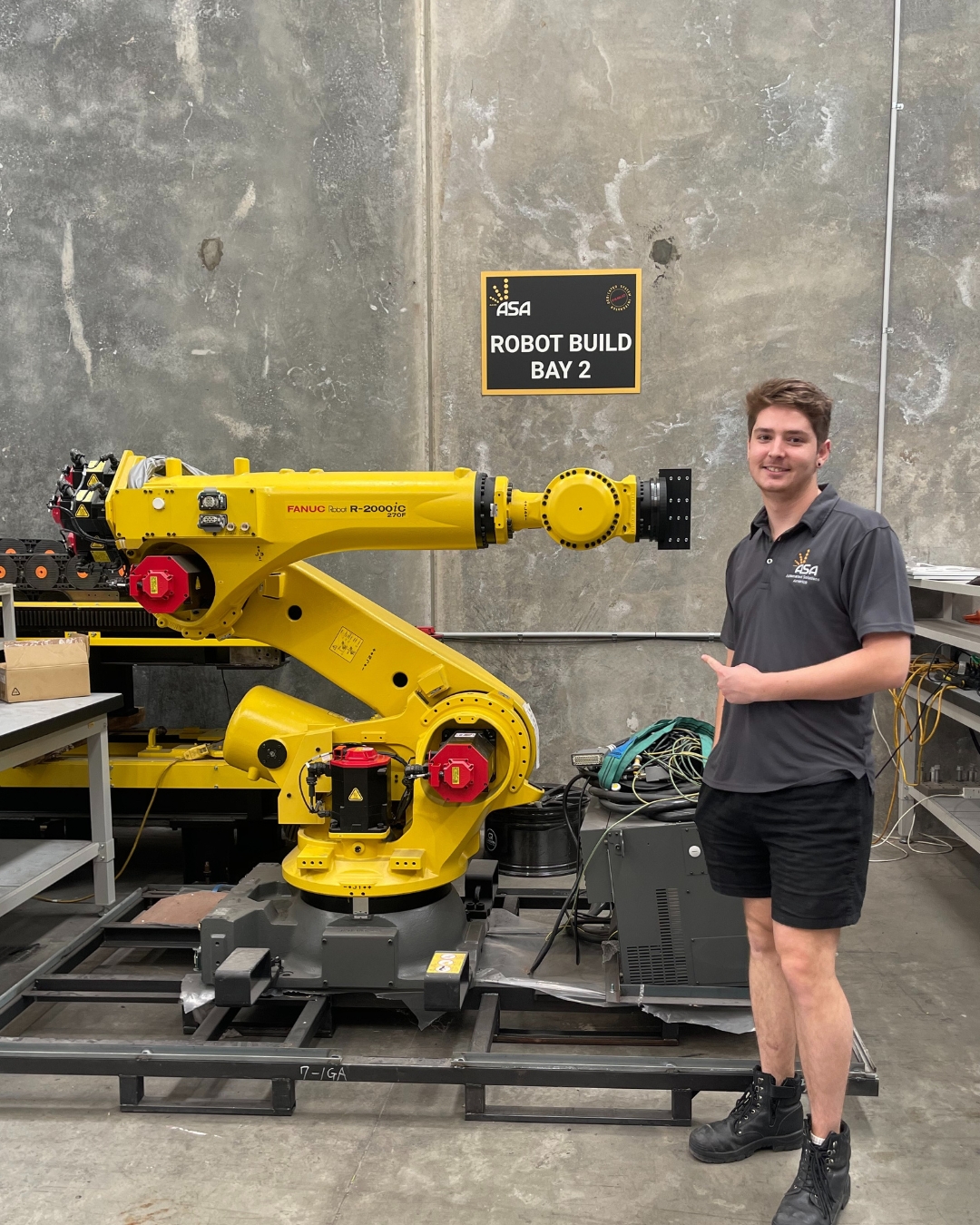
Image credit: automatedsolutions.com.au
Cost efficiency is a major driving factor behind robot arms’ widespread use. Factories are constantly under pressure to minimize production errors, decrease materials waste, and decrease work-related accidents. Robotic arms tackle these challenges head-on. Robots can eliminate costly errors, and reduce waste of raw materials through performing repetitive tasks more accurately than humans. For high-volume industries, like automotive manufacturing, robot arms guarantee the highest quality assembly by performing exact welding and parts placement. This accuracy can result in significant savings because less damaged items mean less work or waste.
Safety is a second cornerstone in the emergence of robot arms. A variety of manufacturing tasks like handling hazardous materials, or operating large machinery pose risks for human workers. Robot arms allow companies to get their workers out of dangerous environments and reduce workplace injuries. Robotic arms, which are designed as a kinematic chain of flexible joints, mimics functionality of a human arm but operates without the danger of physical injury. They are equipped with robotic hands, or programmable end-effectors. They are able to perform tasks like grasping spinning and welding, in conditions that would make it dangerous for human beings.
The versatility of robotic arms makes them a game-changer across diverse industries. Robots can be used for a variety of tasks. From automotive assembly to electronics production. They can handle complex operations with unparalleled precision, like painting and tending of machines. Robotic arms in warehousing have revolutionized palletizing through the automation of loading of products onto pallets. Automation not only increases efficiency but also increases reliability since robot arms are able to perform their work without fatigue.
Cobots are a new breed of robots that work together with humans. Cobots with robotic arms, unlike conventional industrial robots that are confined in isolated cells, are designed to interact with humans safely and seamlessly. The robotic hand of a cobot can be used to perform difficult lifting tasks and repetitive tasks in factories, ensuring that human workers can free to perform more demanding duties. Collaboration increases productivity as well as ensures a safe working environment since cobots are able to be programmed so that they can adjust or stop their movements if someone is nearby.
The effect of robotic arms extends beyond safety and efficiency, to the very structure of manufacturing today. The ability of robotic arms to carry out tasks such as welding assembly, assembly, or even handling materials with precision has made them indispensable in high-stakes industries. For instance, in automotive production, a robotic arm can move and rotate parts during assembly, which ensures perfect alignment without human intervention. Robot arms are also employed in electronics to care for fragile components. This reduces damage, and enhances output quality.
As industries continue their evolution, robotic arms’ role will grow. Their ability to lower costs, improve safety and adapt to diverse tasks make them the foundation of the future of manufacturing. Robot arms, that combine the latest technologies and human creativity is not just a tool they are also partners in the process. They drive forward the pace of innovation and change how the world is constructed.